A New Chapter in Indus Valley Decipherment
For over a century, the Indus Valley script has remained one of the most stubborn puzzles in the history of linguistics and archaeology. Despite thousands of inscribed seals and tablets unearthed from Harappa, Mohenjo-daro, and dozens of smaller sites, no widely accepted decipherment has emerged — until now. A research team at Inner Mongolia Honder College has put forward a compelling new reading that links Indus Valley seal characters directly to Chinese oracle bone inscriptions (甲骨文) and bronze script (金文), opening an extraordinary cross-cultural window into the ancient world.
The Seal That Changed Everything
The breakthrough centers on a particular seal inscription that the team has deciphered as containing four distinct characters: 卜 (divination), 回 (spirit/return), 祖 (ancestor), and 一 (one). Below these characters, a bovine figure is prominently depicted. The combination of divinatory symbols with an ancestral reference and a bovine image suggests a ritual context — a prayer or offering directed at an ancestor spirit, mediated through the sacred bull. This reading aligns remarkably with what we know of Shang dynasty oracle bone divination practices, where ancestors were consulted through ritual specialists and animal sacrifice.
Structural Parallels with Chinese Script
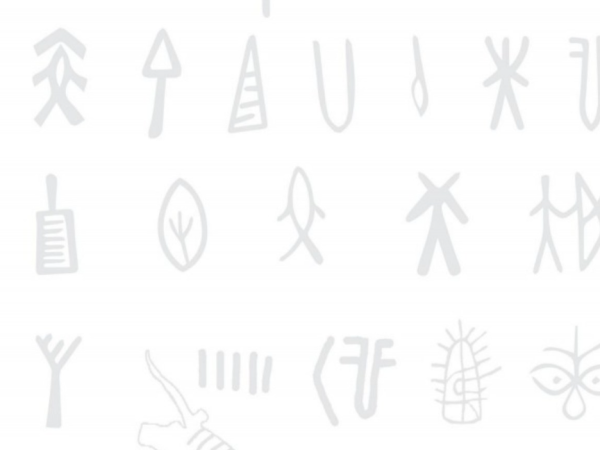
What makes this decipherment particularly persuasive is the structural and semantic correspondence between the Indus characters and their proposed Chinese equivalents. The character 卜 (divination) retains its characteristic forked shape in both scripts. The character 回 (spirit) appears as a nested square, symbolizing the cyclical return of ancestral spirits. 祖 (ancestor), rendered in its archaic form 且, bears a striking resemblance to the Indus glyph — a form that also appears in Hongshan Culture rock art thousands of kilometers away. The numeral 一 (one) is universal in its simplicity, yet its placement atop the seal suggests a singular invocation or primary deity.
“This discovery does not merely decode a handful of symbols — it reveals a shared symbolic grammar between two of the world’s oldest civilizations, suggesting that cultural exchange along ancient trade routes was far deeper and more systematic than previously imagined.”
Implications for Future Research
If this decipherment holds up to scholarly scrutiny, the implications are profound. It would mean that the Indus script is not an isolated writing system but part of a broader Eurasian family of symbolic communication that includes early Chinese writing. The bovine figure beneath the characters further reinforces the connection: the bull was a sacred totem in both Indus and early Chinese ritual culture, serving as a bridge between the human and divine realms. Future work will focus on applying this analytical framework to the full corpus of Indus seal inscriptions, with the hope of building a comprehensive bilingual dictionary of Indus–Chinese correspondences.