Edited by :TJ
Across prehistoric Eurasia, small signs, animal forms, human faces, and ritual images often carried meanings that were larger than their physical scale. This feature article explores two powerful visual worlds: the seals of the Indus Valley Civilization and the rock-art and ritual landscape associated with Hongshan Culture in northern China.
A Careful Comparative Approach
Comparing Hongshan rock art with Indus seals is intellectually valuable, but it also requires methodological restraint. The Indus script remains undeciphered, and there is no scholarly consensus that any particular Indus sign can be translated directly as “ancestor” or “birth.” For that reason, the terms Ancestor and Birth in the following tables should be understood as provisional interpretive labels used in a comparative catalogue, rather than established readings of the Indus script.
Within this cautious framework, the comparison is still meaningful. Both regions preserve material evidence for ritual life, social memory, symbolic communication, and ideas about descent, renewal, and human continuity. These themes are central to the study of early complex societies.
Research note: It is anachronistic to claim that prehistoric communities understood heredity in modern genetic terms, such as chromosomes. A more scientifically sound interpretation is that repeated human, ancestral, reproductive, and ritual motifs indicate concern with lineage, fertility, social continuity, and the relationship between the living and the dead.
Indus Seals: Symbols, Administration, and Ritual Meaning
The Indus Valley Civilization flourished in parts of present-day Pakistan and northwestern India during the third millennium BCE. Harappa and Mohenjo-daro were among its major urban centers. Thousands of seals, sealings, tablets, and other inscribed objects have been recovered from Indus sites. Most inscriptions are brief, and the script is still unread, which makes definitive translation impossible.
Nevertheless, the archaeological context of Indus seals is increasingly clear. Many seals were made of steatite, often with animal motifs and short sign sequences. They were likely involved in identification, exchange, storage, administrative control, and possibly ritual communication. Recent scholarship has also emphasized the role of seals and tablets as formalized data carriers linked to taxation, trade, craft regulation, commodity control, and access control.
| INTERPRETIVE SIGN CATEGORY | HARAPPA | MOHENJO-DARO | TOTAL |
|---|---|---|---|
| “Ancestor” category | 15 | 160 | 175 |
| “Birth” category | 4 | 44 | 48 |
| Total | 19 | 204 | 223 |
Note: These counts are preserved from the supplied dataset. The English labels are interpretive and should not be presented as a confirmed decipherment of the Indus script.
MATERIAL FORM
Indus seals are compact, portable objects. Their scale suggests practical use in systems of marking, sealing, authorization, or exchange.
SYMBOLIC FIELD
Animal figures, human or divine-looking forms, plants, and short sign strings create a dense visual language that may combine economic and ritual meanings.
Hongshan Culture and the Ritual Landscape of Northern China
Hongshan Culture was first named after discoveries at Hongshanhou in Chifeng, Inner Mongolia. It is generally dated to approximately 6,500–5,000 years ago and was distributed across a broad area of northeastern China, including parts of southeastern Inner Mongolia, western Liaoning, northern Hebei, and the Xiliao River and Daling River regions.
The Hongshan cultural sphere is especially known for jade objects, ritual architecture, stone-mound burials, altars, and temple remains. Niuheliang, one of the most important Hongshan sites, has revealed a complex ritual landscape with altars, tombs, jade-rich burials, and clay sculptures. These remains indicate social differentiation and a sophisticated ceremonial tradition.
Recent discoveries in the Chifeng region continue to enrich this picture. Excavations at Yuanbaoshan in Aohan Banner, for example, have produced important Hongshan jade finds, including jade dragons and other ritual objects. Such discoveries reinforce the significance of Chifeng and its surrounding landscape for understanding Hongshan ritual practice, social organization, and long-distance cultural interaction.
c. 6,500–5,000 BP
Hongshan Culture develops in northeastern China, with agriculture, settlements, jade production, and ritual practices.
Late Hongshan
Large ritual centers such as Niuheliang reveal altars, temple remains, stone-mound tombs, jade artifacts, and social hierarchy.
Recent research
New finds in Chifeng and surrounding areas continue to refine the chronology and cultural significance of Hongshan ritual sites.
Rock Art, Fertility, and Ancestral Memory in the Chifeng Area
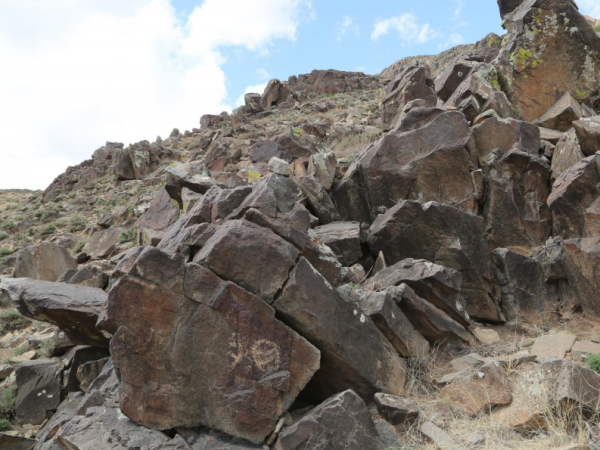
Rock paintings and engravings in northern China form a long and varied tradition. Some panels may belong to the broader cultural environment of the Hongshan period, while others may date to later phases. Each image therefore needs to be studied through its own archaeological context, technique, pigment, weathering, and regional parallels.
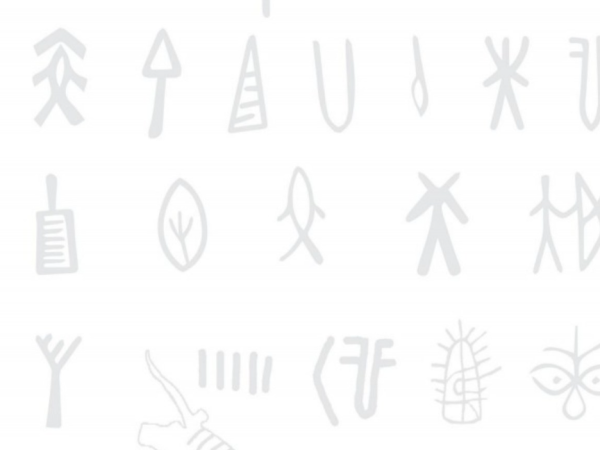
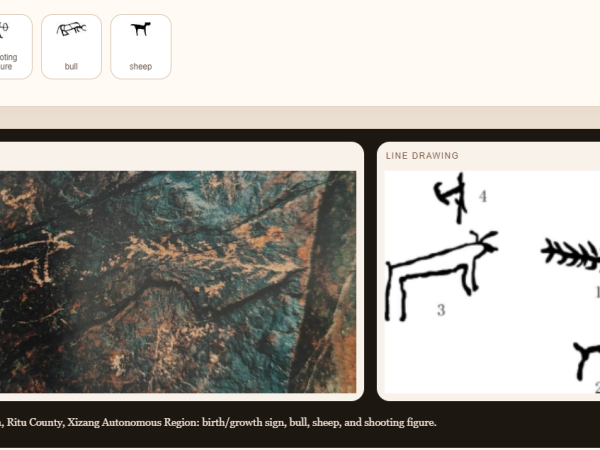
In the Chifeng-area dataset used here, fertility-related images and possible ancestral signs appear with notable frequency. These motifs include sign-like forms, human faces, and images interpreted as fertility totems. Taken together, they suggest that the creators of these images were deeply concerned with birth, renewal, community continuity, and the enduring presence of ancestors.
| TYPE | “BIRTH” SIGN | HUMAN-FACE FERTILITY-TOTEM IMAGES | “ANCESTOR” SIGN | TOTAL |
|---|---|---|---|---|
| Quantity | 33 | 44 | 45 | 122 |
Note: The numbers above are retained from the supplied material. The dating and interpretation of rock-art motifs should be confirmed through site-specific archaeological analysis.
Fertility and Ancestors as Shared Human Concerns
Fertility worship and ancestor veneration are not isolated phenomena. In many early societies, the dead were not simply remembered; they were understood as continuing presences who could protect the living, validate social identity, and connect human communities with land, animals, seasons, and cosmic order. Fertility, in this sense, was not limited to biological reproduction. It also included agricultural abundance, the multiplication of herds, the prosperity of households, and the renewal of society across generations.
Hongshan ritual remains, including jade objects, burials, altars, and human or ancestral imagery, point to a complex spiritual world in which ancestors, earth, heaven, animals, and fertility were closely intertwined. Indus seals, although not deciphered, likewise show a rich visual system combining animals, signs, humans, and ritual-looking scenes. The two traditions should not be treated as directly connected without evidence. However, they can be studied comparatively as different responses to a shared prehistoric challenge: how to make life, lineage, authority, and memory visible through durable symbols.
HONGSHAN EVIDENCE
Rock art, jade, ritual architecture, and burial practices suggest a symbolic system concerned with ancestry, renewal, social rank, and the sacred landscape.
INDUS EVIDENCE
Seals and tablets show standardized motifs and sign sequences, probably used in administrative contexts and possibly carrying ritual or identity-related meanings.
Why this comparison matters
By placing Hongshan rock art and Indus seals side by side, we can ask broader questions about early civilization: How did prehistoric communities express social memory? How did they represent descent and renewal? How did images and signs become tools of ritual, identity, and authority? These questions make the study of ancient symbols relevant not only to archaeology, but also to the history of human imagination.
Selected Research Sources
- UNESCO World Heritage Centre. “Sites of Hongshan Culture: The Niuheliang Archaeological Site, the Hongshanhou Archaeological Site, and Weijiawopu Archaeological Site.”
- Liu Guoxiang. “Archaeological Discovery of the Hongshan Culture Jade Dragons.” The UNESCO Courier, 2025.
- British Museum collection notes on Indus stamp seals and the undeciphered Indus script.
- Bahata Ansumali Mukhopadhyay. “Semantic scope of Indus inscriptions comprising taxation, trade and craft licensing, commodity control and access control.” Humanities and Social Sciences Communications, 2023.
- Sun Shoudao and Guo Dashun. “The Dawn of China’s Five Thousand Years of Civilization.” People’s Pictorial, 1986(8), p. 5.